Unfamiliar words stop the sentence
One difficult word can interrupt the whole line and make them wait for help.
September 2026 intake | Ages 6-7
From sounding it out to understanding it.
A guided reading programme that helps growing readers tackle unfamiliar words, read with greater fluency, understand richer texts and respond with confidence.
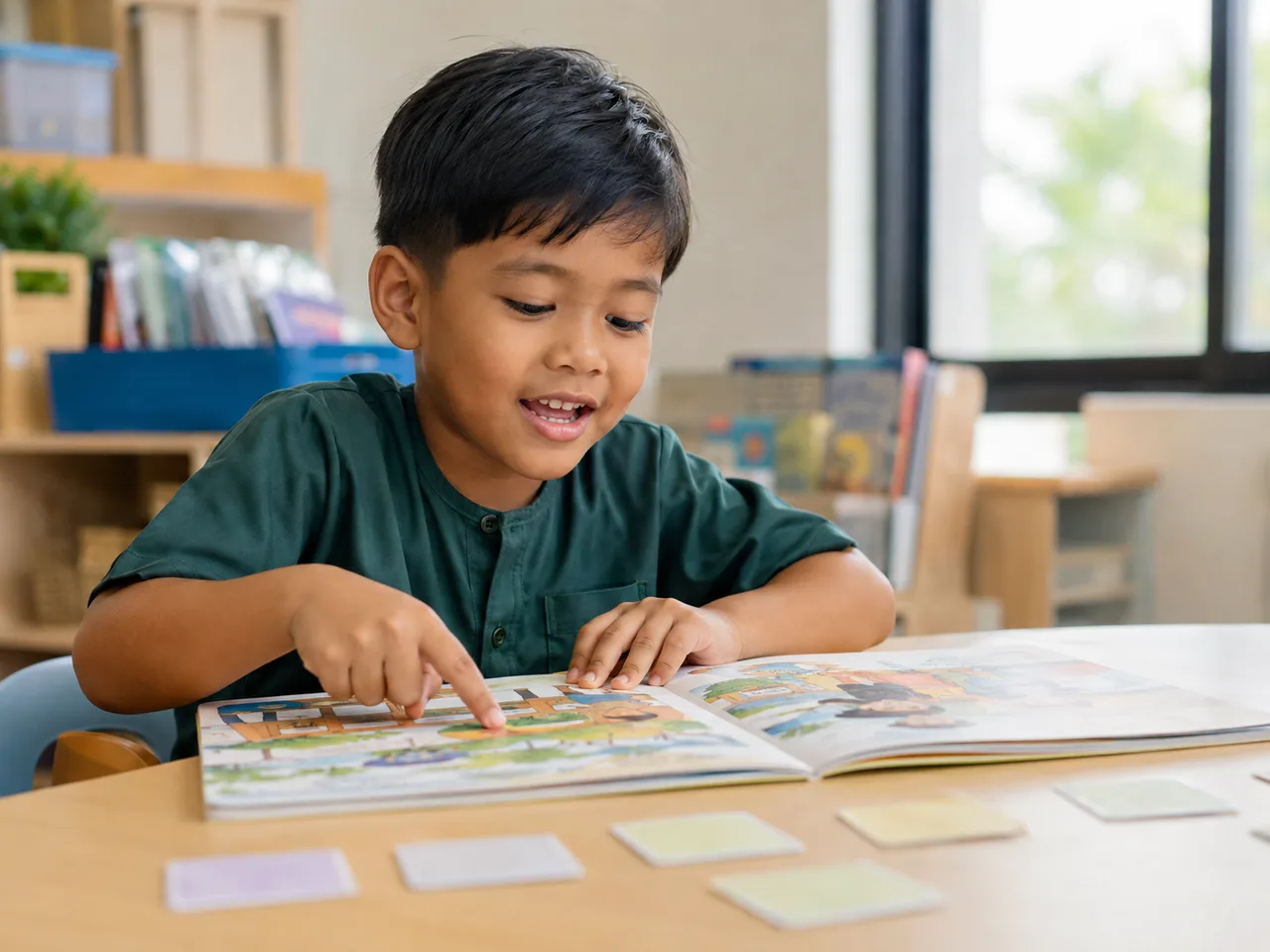 Guided reading, one clear strategy at a time
Does this feel familiar?
One difficult word can interrupt the whole line and make them wait for help.
They may read word by word, with little phrasing, expression or natural flow.
They finish the paragraph but struggle to retell, explain or discuss what happened.
A different way in
We help children decode unfamiliar words, read with accuracy and phrasing, make meaning from the text, then explain what they understood.
Reading becomes a set of moves a child can use on purpose, rather than a guess they hope turns out right.
The Young Readers method
Hover, tap or focus each card to see what that step may help a child begin to do.
Inside the classroom
Children move through short, purposeful steps that turn an unfamiliar text into something they can read, understand and talk about.
The opening learning cycle
These four weeks are the opening cycle of a complete 10-lesson term. They are not the full programme.
Week 1
Unfamiliar words stop being a wall.
Children strengthen decoding skills and learn practical ways to approach unfamiliar words instead of freezing or guessing.
Why it works
It is reading accurately, smoothly and with understanding. The aim is a more confident reader who has a usable strategy for difficult words and can think beyond the final sentence.
September 2026 intake
Select Saturday or Sunday, then add the first lesson directly to your calendar.
Questions? We have got you.
No. Young Readers is for children who can read words but still find reading hard work. We focus on decoding unfamiliar words, reading with fluency and understanding what they read.
No. The programme runs for 10 lessons. The first four weeks shown on this page are the opening learning cycle, not the entire term.
Each lesson is 1.5 hours, once a week, on your chosen Saturday or Sunday cohort.
Yes. Select your preferred cohort in the questionnaire below, and the Schola team will confirm availability with you.
Not sure yet? That is okay.
Answer a few quick questions. We will listen first, then talk through the most suitable starting point with you.